
"coffee yield trends"
600 article(s) found

General knowledge of Coffee Bean roasting Development Direction of Fine Coffee Baking
For a long time, the production of coffee has been improved by increasing the yield and reducing the difficulty of planting according to the economic factors. However, with the promotion of boutique coffee, the nature of coffee has also changed, from the trend of economic priority to allowing consumers to enjoy better quality coffee. More and more people are willing to buy high-quality coffee beans at a high price, or even go to the producing area in person to upgrade from cultivation to quality.

What exactly is Ninety Plus coffee90+ coffee?
Professional coffee knowledge exchange more coffee bean information please follow the coffee workshop (Wechat official account cafe_style) friends who like to drink individual coffee, of course, are no strangers to Yega Xuefei, geisha or Manning. But when it comes to the raw coffee beans of Ninety Plus (90 +), many coffee lovers always feel that they are wearing a mysterious veil. In 2006, Joseph Brodsky founded N

Boutique coffee specialty coffee coffee bean variety
Abstract: coffee trees are generally divided into three categories: Arabica species, Robesta species and Liberika species. With regard to the cultivation of crops, seed selection is a very important factor. Every year, agronomists are studying higher quality and higher yield varieties of wheat, soybeans and corn, as well as how to make apples more delicious, beautiful and resistant to diseases and insect pests. in fact, the same is true of coffee.

Brazil's coffee bean production ranks first in the world Arabica coffee bean producing area coffee consumption new model
Brazil's coffee production is expected to exceed 61.6 million 60-kilogram bags by 2020, up from 49.3 million bags a year ago. Coffee crops are characterized by a biennial effect on harvest yields, with very high yields one year followed by relatively low yields. 2020 is the so-called positive double year. Brazil is by far the world's largest producer of coffee, while in the domestic sector the commodity accounts for 20 per cent
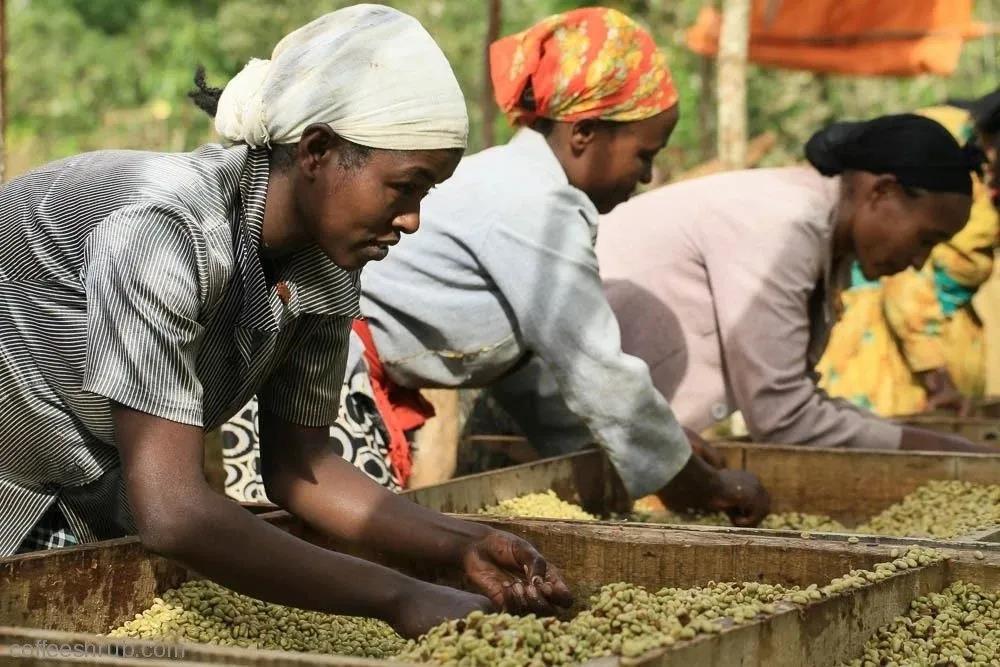
Climate change affects the yield and quality of Ethiopia's Yega Xuefei boutique coffee beans
Professional coffee knowledge exchange more coffee bean information follow coffee workshop (Wechat official account cafe_style) A new study conducted by an international research group shows that climate change is affecting Ethiopia, Africa's largest coffee producer! In the future, the production of Ethiopia's boutique coffee beans will continue to decline, and the flavor will become more and more insipid. Carry out the research
A brief introduction to 90 + ninety plus
Recently, when I talked to a lot of people about 90 + beans, I found that many people still don't know the nomenclature, classification and grade of 90 +. In retrospect, when I first came into contact with 90 +, it took me some time to get a general idea of what the name of 90 + was all about. I have to say that from concept to brand management, this is a very special company, but at the same time for the average consumer

How much Brazilian coffee beans yield Brazilian fine coffee beans flavor characteristics brewing parameters Suggestions
Professional coffee knowledge exchange More coffee bean information Please pay attention to coffee workshop (Weixin Official Accounts cafe_style) Coffee varieties, geography and climate environment, soil texture, planting technology, harvesting, processing methods, just like the results of soil cultivation, will directly affect the quality of coffee beans. In addition to Colombia, Brazil is another big coffee country in South America. Brazil is the world

What is 90 years? How is it different from the others?
Professional coffee knowledge exchange more coffee bean information please follow the coffee workshop (Wechat official account cafe_style) what is 90th? How is it different from the others? Recently, when I talked about 90 + beans, I found that many people still don't know the nomenclature, classification and grade of 90 +. In retrospect, when I first came into contact with 90 +, it took me some time to understand 9.

An introduction to the flavor description of the baking area of Pacamara coffee beans in Guatemala
Description of the regional flavor of the baking area of Guatemala Pacamara coffee beans Costa Rica says that these varieties are grown in different fields. Because the profit of the low-yielding geisha is higher than that of the Tibika, there is Ruyiru in Kenya. No matter which variety, the taste has been greatly improved, and more distinctive. If you can make a name for the coffee garden by winning the Zhuoyue Cup COE

Description of roasting degree and Flavor of Guatemala Pacamara Coffee beans
Description of roasting degree and flavor of Guatemala Pacamara coffee beans introduction to Costa Rica that these varieties are grown in different fields. Because the profit of the low-yielding geisha is higher than that of the Tibika, there is Ruyiru in Kenya. No matter which variety, the taste has been greatly improved, and more distinctive. If you can start the coffee garden by winning the excellent Cup COE

Two pictures of coffee family tree in Chinese and English to learn more about coffee variety system.
Coffee variety is one of the three elements of fine coffee variety, altitude and processing, among which coffee variety is one of the most important elements. Understanding coffee family tree is a necessary knowledge to learn fine coffee. In fact, there are hundreds of coffee tree species on the earth, nearly 100 in Arabica alone, but when it comes to fine coffee, only Arabica beans can be called.
Boutique coffee (specialty coffee) II
With regard to the cultivation of crops, seed selection is a very important factor. Every year, agronomists are studying higher quality and higher yield varieties of wheat, soybeans, and corn, as well as how to make apples more delicious, beautiful and resistant to diseases and insect pests. In fact, the same is true of coffee. The quality and taste of coffee are determined by the quality of the varieties. Coffee trees are generally divided into three categories in the industry: Arabica species
Boutique coffee specialty coffee coffee bean variety
Abstract: coffee trees are generally divided into three categories: Arabica species, Robesta species and Liberika species. With regard to the cultivation of crops, seed selection is a very important factor. Every year, agronomists are studying higher quality and higher yield varieties of wheat, soybeans and corn, as well as how to make apples more delicious, beautiful and resistant to diseases and insect pests. in fact, the same is true of coffee.
What are the coffee beans for fine coffee learning?
Seed selection is a very important factor in crop cultivation. Agricultural scientists are studying better and higher yield varieties of wheat, soybeans and corn every year. They are also studying how to make apples taste better and more beautiful and resistant to pests and diseases. In fact, coffee is the same. The quality and taste of coffee are determined by the quality of varieties. The industry generally divides coffee trees into three categories: Arabica

World Coffee Bean Certification What is Organic Coffee Bean? How to properly certify organic coffee beans?
Organic coffee is coffee grown without the use of synthetic pesticides, herbicides or chemical fertilizers. These ways of growing coffee help maintain a healthy environment and keep groundwater pure. After harvesting, be sure to use an organic certified roasting plant to process coffee beans. Organic coffee is coffee beans grown in the shade.
Boutique coffee specialty coffee (2) Coffee bean varieties
With regard to the cultivation of crops, seed selection is a very important factor. Every year, agronomists are studying higher quality and higher yield varieties of wheat, soybeans, and corn, as well as how to make apples more delicious, beautiful and resistant to diseases and insect pests. In fact, the same is true of coffee. The quality and taste of coffee are determined by the quality of the varieties. Coffee trees are generally divided into three categories in the industry: Arabica species

Brief introduction of 90 ninety plus to gain an in-depth understanding of the cultural development and knowledge of 90 + coffee beans
Recently, when I talked to a lot of people about 90 beans, I found that many people still don't know the naming, classification and grade of 90. In retrospect, when I first came into contact with 90, it took me some time to get a general idea of what the name of 90 was all about. I have to say that from concept to brand management, this is a very special company, but at the same time for the average consumer
4C Association Coffee Certification Coffee Bean Certification quality Coffee
About the translator: Mo Lizhen (1966 ~), female, bachelor degree in agriculture, has been engaged in scientific research, production techniques, training and cup products of small seed coffee in Pu'er since 1988. He has published many papers in Tropical crop Research, Yunnan Hot farming Science and Technology and Tropical Agricultural Science, and published a monograph on High yield and quality cultivation techniques of small seed Coffee. 4C certification

Introduction of boutique coffee beans Cahayang Gan Manor Coffee Manor
Characteristics of boutique coffee 1. Boutique coffee beans must be high-quality beans with flawless beans. It should have an outstanding flavor, not without a bad taste, but with a particularly good taste. two。 Boutique coffee beans must be excellent varieties, such as the original bourbon species, mocha species and Tippica species. The coffee beans produced by these trees have unique aroma and flavor.